

Kingdom Monera and Protista
Subject: Science and Technology

Overview
Kingdom Monera contains all prokaryotic organisms, including bacteria and cyanobacteria, which lack a membrane-bound nucleus. Kingdom Protista contains unicellular eukaryotes such as Amoeba, Paramecium, Euglena, and Plasmodium. Compare the two kingdoms and understand how they differ in cell structure, organelles, nutrition, and complexity.
1. Kingdom Monera
Kingdom Monera is the oldest and most primitive kingdom of living organisms. It includes all prokaryotic organisms, which are organisms that lack a membrane-bound nucleus. Monera are the simplest forms of life and are found in virtually every habitat on Earth, including hot springs, deep oceans, and frozen soil.
Key Feature: Monera is the only prokaryotic kingdom. Organisms have no membrane-bound nucleus and no membrane-bound organelles.
The characteristics of Kingdom Monera are as follows:
| Characteristic | Description |
|---|---|
| Cell type | Prokaryotic — no membrane-bound nucleus |
| Organisation | Unicellular (single-celled) |
| Cell wall | Present — made of peptidoglycan in bacteria |
| Organelles | Absent — no mitochondria, endoplasmic reticulum, etc. |
| Mode of nutrition | Autotrophic or heterotrophic; some are parasitic |
| Reproduction | Asexual — by binary fission |
Common examples of Kingdom Monera include Escherichia coli (gut bacteria), Mycobacterium tuberculosis (causes tuberculosis), Nostoc and Anabaena (blue-green algae that fix atmospheric nitrogen), and Mycoplasma (the smallest known living organisms, which lack a cell wall).
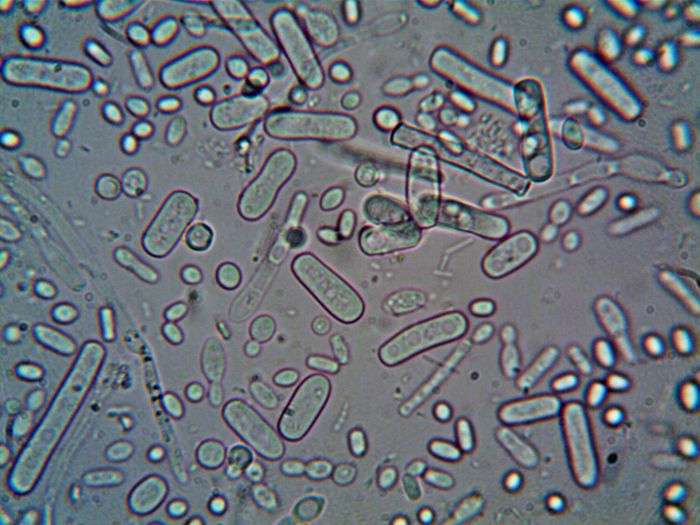
Rod-shaped bacteria viewed under a microscope. These prokaryotic organisms belong to Kingdom Monera and have no membrane-bound nucleus.
2. Kingdom Protista
Kingdom Protista includes all unicellular eukaryotic organisms, which are organisms that have a true membrane-bound nucleus but exist as single cells. Protists are more advanced than Monera because their cells contain a defined nucleus and membrane-bound organelles. Most protists live in aquatic environments such as ponds, lakes, and the ocean.
Key Feature: Protista are unicellular eukaryotes. They have a true nucleus unlike Monera, but remain single-celled unlike Fungi, Plantae, and Animalia.
The characteristics of Kingdom Protista are as follows:
| Characteristic | Description |
|---|---|
| Cell type | Eukaryotic — true membrane-bound nucleus present |
| Organisation | Mostly unicellular; some colonial forms exist |
| Cell wall | Present in some (e.g. diatoms with silica walls); absent in others (e.g. Amoeba) |
| Organelles | Present — mitochondria; chloroplasts in photosynthetic protists |
| Mode of nutrition | Autotrophic (algae), heterotrophic (protozoa), or both (Euglena) |
| Reproduction | Asexual (binary fission, budding) and sexual |
Common examples of Kingdom Protista include Amoeba (moves using pseudopodia, engulfs food by phagocytosis), Paramecium (moves using cilia, found in pond water), Euglena (has chloroplasts, can photosynthesise or feed heterotrophically), Plasmodium (parasitic, causes malaria, transmitted by Anopheles mosquitoes), and Diatoms (photosynthetic, have silica cell walls, form a large part of ocean plankton).
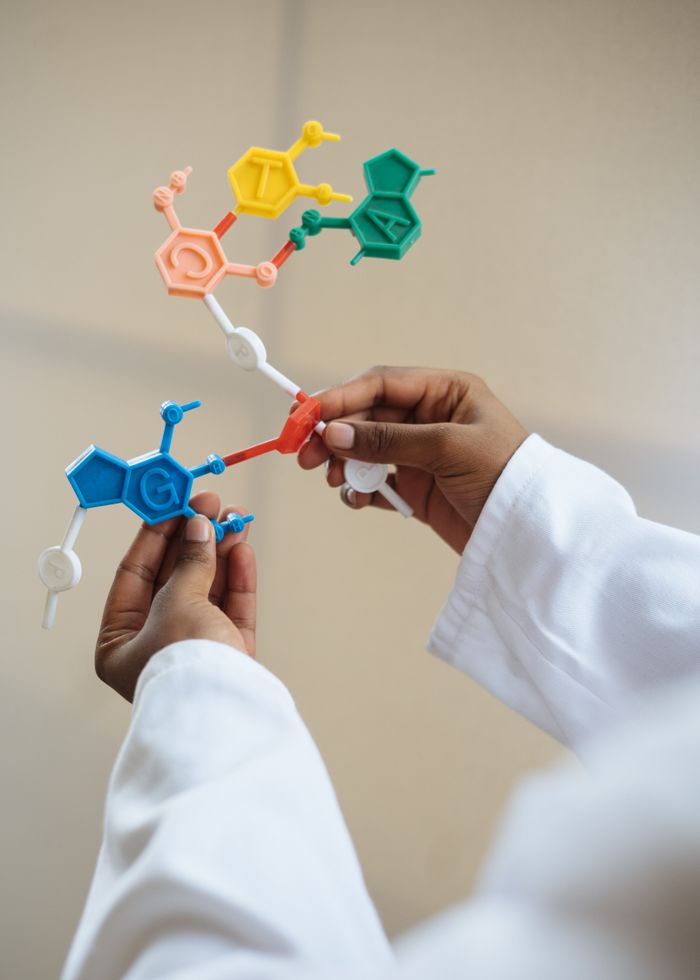
A microscope slide prepared from a pond water sample. Protists such as Amoeba and Paramecium are commonly found in such aquatic environments.
3. Comparison: Monera vs Protista
| Feature | Kingdom Monera | Kingdom Protista |
|---|---|---|
| Cell type | Prokaryotic | Eukaryotic |
| Nucleus | Absent (no membrane) | Present (membrane-bound) |
| Organelles | Absent | Present |
| Cell wall | Peptidoglycan | Silica (diatoms) or absent |
| Nutrition | Autotrophic / Heterotrophic | Autotrophic / Heterotrophic / Both |
| Complexity | Most primitive kingdom | More advanced than Monera |
| Examples | Bacteria, Cyanobacteria | Amoeba, Euglena, Paramecium |
4. Watch and Learn
The following videos explain Kingdom Monera and Protista. Click on a thumbnail to watch.

Things to remember title
Things to Remember
- Kingdom Monera includes all prokaryotic organisms — no membrane-bound nucleus.
- Monera reproduce asexually by binary fission.
- Examples of Monera: E. coli, M. tuberculosis, Nostoc (Cyanobacteria).
- Kingdom Protista includes unicellular eukaryotic organisms with a true nucleus.
- Examples of Protista: Amoeba, Paramecium, Euglena, Plasmodium, Diatoms.
- Euglena is unique — it can photosynthesise (autotrophic) or consume food (heterotrophic).
- Plasmodium causes malaria; transmitted by Anopheles mosquitoes.
- Key difference: Monera = prokaryotic; Protista = eukaryotic.
© 2021 Saralmind. All Rights Reserved.
 Login with google